President’s Post: Why unpopular speech needs our protection

je_suis_charlie_fist_and_pencilFair warning: this blog post is likely to offend. I’m about to advocate for those who make it their business to piss people off.

As I write this, French police are on the brink of apprehending the terrorists who attacked the Charlie Hebdo offices in Paris and killed 12 staff members there on January 7.

The presumed motive for the bloodshed? Most agree that the killers were offended by the messages communicated in editorial cartoons published in the magazine, though specifics should become clearer when the killers are brought to justice.

Yes. The magazine’s editorial cartoons—indeed much of its editorial content—had the potential to offend. But that is the very nature of political and social satire. It’s the rhetorical risk takers—the folks who stick their necks out and say publicly what others will only say behind closed doors—who are among the leaders in fostering free and open public discussion about the difficult issues of the day. Charlie Hebdo’s editors knew they were taking risks, but they took them knowingly and intentionally because to silence public conversation is to ensure that only the very few and powerful will have a voice in social and political issues. And silencing of any kind is simply not acceptable. They understood as Mark Twain once wrote, “Courage is resistance to fear, mastery of fear—not absence of fear.”

One of the most important modern defenses of unpopular speech can be found in the U.S. Supreme Court’s unanimous ruling in Hustler Magazine v. Falwell (1988). Justice Rehnquist, writing for the majority noted:

Despite their sometimes caustic nature, from the early cartoon portraying George Washington as an ass down to the present day, graphic depictions and satirical cartoons have played a prominent role in public and political debate…[T]he fact that society may find speech offensive is not a sufficient reason for suppressing it. Indeed, if it is the speaker’s opinion that gives offense, that consequence is a reason for according it constitutional protection. — Hustler Magazine, Inc. v. Falwell, 485 U.S. 46 (1988)

Provocative messages are not hard to locate in international media coverage; Charlie Hebdo’s cartoons were neither the first to outrage, nor the most vitriolic. One needs only to look to Westboro Baptist Church funeral shenanigans to find equally repugnant public messages designed to insight outrage.

Yes. We are obligated to raise important ethical concerns that ask: ‘just because we can, does it mean we should?’ Is offense for the sake of offense instructive or socially valuable? Is speech that lampoons or belittles a specific group of people based on race, sex, sexual orientation, or religious preference hate speech? I don’t plan to answer these questions here. They’re tough ones and worthy of debate. But here’s the thing: debate is precisely what Charlie Hebdo and others advocate by challenging the status quo. We all have a choice as to whether we engage in the verbal sparring that political satire seeks to inspire. That choice happens when messages are made available. Conversely, choice disappears when silence is imposed.

What does a terrorist attack in France have to do with American student journalists?

Plenty.

Challenges to free speech happen all too frequently on college campuses across our nation and it is imperative student journalists know how to respond. For example, recently the University of Iowa’s administration chose to quickly remove from the campus a piece of public art in the form of a hooded Ku Klux Klan member. The figure was covered with newspaper articles that chronicled America’s long-standing racial tensions. The figure was shocking to many who saw it, and though it only stood in the U of I’s free speech zone for a few hours, it inspired outrage and a great deal of conversation. According to an Iowa State Daily article, while the artist was asked to remove the piece under the auspices of not having secured the proper permits to display it, SPLC Executive Director, Frank LoMonte noted, “”It’s hard to start dialogue about something upsetting without showing something upsetting,” Indeed. But if the dialogue was stopped through physical removal of the art, it was incumbent of the student journalists to pick up that mantel and continue it.

Journalists learn to challenge the status quo often for the first time in college. They do it, not unlike Charlie Hebdo, with cartoons, editorials, and asking tough questions when news happens. The creative social critics who employ satire often receive a great deal of push back, sometimes from peers, other times from university administrators or faculty. And when media backs down or is silenced, the conversation stops.

Real social change happens when hard conversations take place. It’s the role of journalists to push the envelope, and yes, sometimes shock or offend. But student media leaders should always weigh the consequences of such action and take these risks knowingly.
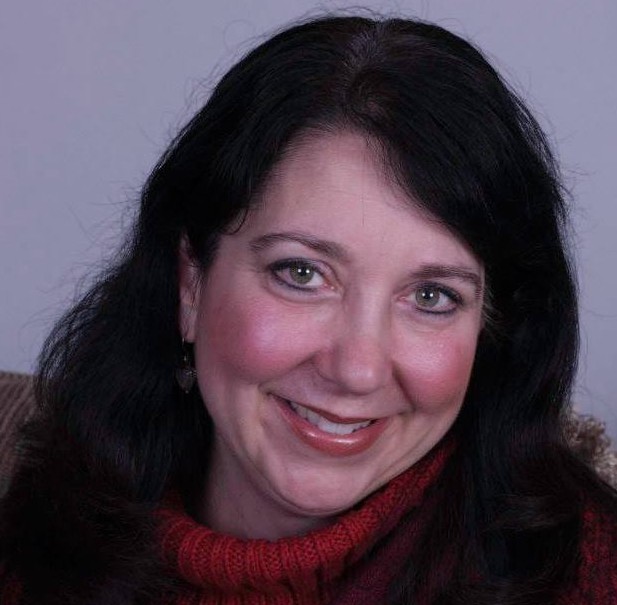

1499499_714671640617_1379616982_nAndrea Frantz, Ph.D. is associate professor of digital media at Buena Vista University, Iowa. She was installed as SCJ President at the 2014 Biennial. She’s an advocate of student journalists and the First Amendment. She’ll be blogging periodically about SCJ and other news.

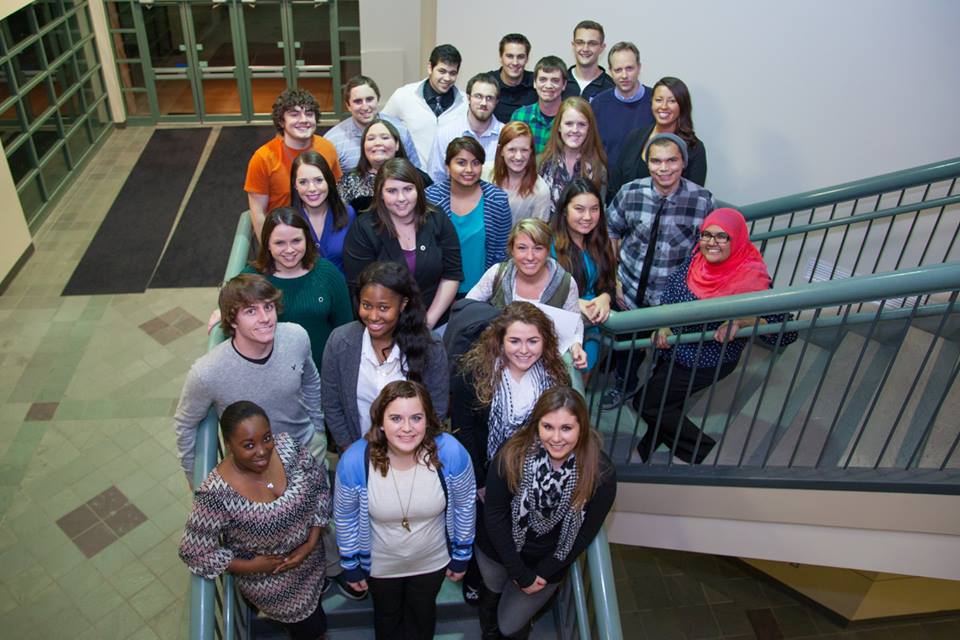
Marywood University inducts 10 new members

Congrats to the Marywood University SCJ Chapter on its recent initiation of 10 new members, bringing their total current Chapter membership to 26 members!

Check out some images from their ceremony, held on Nov. 14.


logo_cornerSend us your induction ceremony photos to see them featured on the SCJ National NewsFeed! Email us at scjnationaloffice@gmail.com!

Tennessee Tech inducts 14 new members

Congrats to the Tennessee Tech University SCJ Chapter on its recent initiation of 14 new members, bringing their total current Chapter membership to 22 members!

Check out some images from their ceremony, held on Oct. 30.


logo_cornerSend us your induction ceremony photos to see them featured on the SCJ National NewsFeed! Email us at scjnationaloffice@gmail.com!

2014 Major Awards Announcement

The Society for Collegiate Journalists is pleased to announce the winners of its major awards.

10473769_313265462211082_2538301959330175096_n

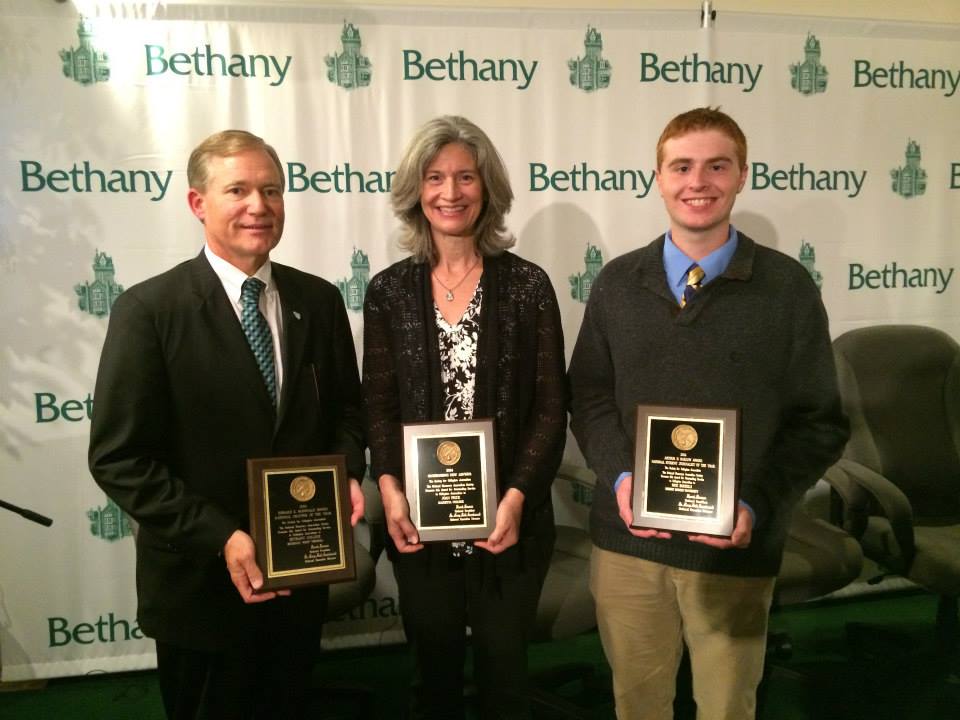
Major award winners: Dr. Scott D. Miller, president of Bethany College, accepts the award for Outstanding Chapter (Bethany College); Dr. Joan Price, Marietta College, for Outstanding New Adviser, and Nick Buzzelli, for Student Journalist of the Year. Awards were presented at the 2014 SCJ Biennial Conference at Bethany College, West Virginia.

The Barlow Award for the Student Journalist of the Year – Nicholas Buzzelli, Robert Morris University

The award is named for longtime SCJ Executive Director Arthur H. Barlow. This award is based on outstanding contributions to college journalism. It is designed to allow SCJ chapter advisers an opportunity to bring national recognition to a student journalist who meets the highest standards of ethics, service, leadership and technical skills.

The winners also receive a $500 prize from National SCJ. The 2013 Arthur H. Barlow Award for Student Journalist of the Year goes to Nicholas Buzzelli.

Nick was nominated by Anthony Moretti, Robert Morris University SCJ adviser.

SCJ Past President and former Executive Director Arthur Barlow made the selection.

In the nomination materials, Moretti wrote, “He (Nick) mentors… new staff members to ensure they are comfortable in their new roles, adjusting to being reporters and gain confidence in their journalistic abilities.

“Nick also is our incoming SCJ chapter president, after being treasurer and vice-president in past years. Through SCJ, he has volunteered with the local Manchester Craftsmen’s Guild, where he helped develop the photography and writing skills of multiple inner-city high school students; with Balancing Out Hunger, our on-campus service initiative in which RMU students donate a portion of their meal-plan dollars at the end of the semester to charity; and in the fall he will lead our new off-campus efforts involving our local Humane Society.”

Moretti sums up his nomination by writing, “In short, Nick is a star and someone who deserves recognition as a Barlow Award recipient because of his commitment to make himself and his community stronger.”

The Barker Award for Adviser of the Year – Robert Noll, John Carroll University                  

This award recognizes the commitment and contribution the adviser makes to an SCJ Chapter. It is named for longtime SCJ National Council member and Past President, Sheridan C. Barker. Excellent SCJ chapters thrive and endure because of the commitment of the SCJ adviser. The adviser is a mentor and a facilitator, a motivator and a link to the chapter’s past and the national organization’s future. The Barker Award recognizes such individuals who are the foundation of our national organization. It is a citation of lifelong achievement.

This year’s Barker award winner is Robert Noll, the SCJ chapter adviser at John Carroll University. SCJ Executive Director Mary Beth Earnheardt made the nomination.

“I first spoke to Bob Noll about his displeasure at the way the National Contest was being managed,” Earnheardt said. “It’s not often that I’m impressed when someone is calling to complain, but Bob wasn’t complaining because he is difficult, he was complaining because he was standing up for his students. As I came to know others who worked with Bob, it became clear that he was one of our brightest stars. The Barker Award is supposed to go to a chapter that has a strong leader and Bob has shown that he is that leader at John Carroll.”

 Outstanding New Adviser – Joan Price, Marietta College

This award is given to an adviser who has advised a chapter (new or existing) for a period of no longer than 6 years and no shorter than 2 years. The purpose of this award is to recognize a new and energetic member of the SCJ family.

This year the recipient of this award is Joan Price from Marietta College. SCJ Executive Director Mary Beth Earnheardt nominated Price.

“I had the pleasure of visiting the beautiful Marietta College campus for a conference before Joan started there,” Earnheardt said. “Because I’m interested in student media I asked our hosts about their campus newspaper and was told that it was in a transition period. I was happy to see it a few years later, winning awards as part of our National Contest. I’ve never met Joan, but I picture her stepping into the job, getting the paper up to speed and being the energy her students needed to excel. I look forward to seeing what her chapter does in the coming years.”

 The McDonald Award for Outstanding National Chapter – Bethany College

Edward E. McDonald spent 15 years of his retirement working tirelessly as national secretary-treasurer of Pi Delta Epsilon; the organization merged with Alpha Phi Gamma in 1975 to become SCJ. This award, in his memory, is given to a chapter that upholds the highest ideals of college student journalism. It is awarded to a long-standing chapter. This year the Bethany College chapter is our McDonald Award winner.

Former SCJ Executive Director Arthur H. Barlow and Executive Director Mary Beth Earnheardt made the nomination.

“I saw the Bethany campus and met M.E. Yancosek Gamble while doing a site visit for our Biennial National Convention,” Barlow said. “I was wowed by the energy and the commitment to quality.”

Earnheardt agreed. “Bethany represents what this award is all about,” she said. “Mort Gamble and Scott Miller have a long history with the organization. Their commitment to students is apparent in the impressive media programs they’ve built. Bethany may be in a small community, but there is nothing small about the way they do media and M.E. Yancosek Gamble has more energy and positivity than anyone I’ve ever met.”

Outstanding New Chapter – Savannah College of Art and Design – Atlanta

This award is given to a chapter that has been chartered or reactivated for a period no longer than 6 years and no shorter than 2 years. The purpose of this award is to recognize a new and energetic member of the SCJ family.

This year the recipient is Savannah College of Art and Design – Atlanta. SCJ Executive Director Mary Beth Earnheardt made the nomination.

“This is the second chapter advised by Jessica Clary and, even though it’s been chartered since 2011 they have been involved in almost everything,” she said. “They regularly do very well in the contest and we’re very pleased to count them among our new rising stars. The kids at SCAD-Atlanta do great work in all kinds of media platforms. This type of approach to journalism is becoming more and more important as we enter a world where information should be both well reported and aesthetically pleasant.”

The Ingelhart Award for Freedom of Expression – Gene Policinski

This SCJ Award recognizes a special and courageous contribution to student journalism. It is named for the “great one” of collegiate journalism, Louis Ingelhart. It is the only SCJ Award that may be awarded to non-members and it carries a $500 prize from National SCJ.

This year the award goes to Gene Policinski. Andrea Frantz, SCJ Second Vice President nominated Policinski.

Frantz wrote, “It is with pleasure that I nominate Gene Policinski for the 2014 SCJ Louis Ingelhart Award. His credentials are indisputable: Chief Operating Officer of the Newseum Institute, Senior Vice President of the First Amendment Center, and a regular First Amendment champion in sessions he has delivered to countless students and advisors at CMA. Whether he is writing about current First Amendment challenges in an op-ed, hosting a rousing “Freedom Sings” concert, or educating teachers in First Amendment bootcamp workshops, Gene is one of the nation’s foremost voices on the five freedoms guaranteed by the First Amendment and their importance to our democracy.

“It’s difficult to find any significant conversation about a First Amendment issue that has occurred in the last two decades in which Gene Policinski’s voice was not present. On a personal note, I look to Gene as a mentor and someone who inspired me to love teaching First Amendment law above almost anything else I do. His passion is infectious, and I’ve been privileged to work by his side on First Amendment sessions at CMA and in Washington D.C. at the Newseum. Always I walk away from such an experience knowing that there is more work to be done in terms of raising awareness, but also reassured that Gene is steering that particular ship.”